
ESTATES




Estates Explained
Under the umbrella of the Estates principal committee, the Garden and Landscape Committee (GLC), Interior Design Committee (IDC) and the Heritage Committee sub-committees, operate as one community. The Chairs all sit on Estates and a number of projects, including the Masterplan, involve more than one group. For example, the renovation of the Heritage rooms was a joint undertaking of Estates and IDC; the Blueprint is a joint initiative of Estates and GLC; IDC and Heritage often collaborate; GLC and IDC both consider flowers, inside and out. More and more we try to operate with common terms of reference, with improved communications amongst us, and as you will read in the following articles with common strategic imperatives and an increase in collaboration.
The staff Estates team has recently been reorganised and expanded, with Louise Collins, Director of Estates, now heading six areas: Buildings (aka Maintenance); Grounds and Gardens; Health, Safety and Environment (HSE); Cleaning and Waste (C&W); Security and Archives, with a total of 94 staff working together at the Club and the Heads reporting to her.
KRIS DE JUNIAC, CHAIR, ESTATES
The importance of colour
In the last year, there have been several separate initiatives at the Club, inspired by the same idea of reinforcing our Club identity. Last year, the Communications team reviewed the signage on the estate, found little uniformity, and created general guidelines for a consistent graphic language. More recently, several departments have begun discussions about creating some commonality in the uniforms worn by staff in different parts of the Club.
Similarly, Estates and GLC have reviewed the exterior furniture and fittings and noted the need for more design consistency across our grounds. This is also part of the Blueprint – the long-range plan for the landscape – responding to the principle that we should work towards greater aesthetic coordination across the Estate. An obvious place to start is with colour. After all, paint is relatively cheap. And colour is a wonderful way to create ambience, signal hierarchies of function and add notes of delight. We engaged Patrick Baty to help us develop guidelines; his recommendation for a Club palette is shown here and recreated on boards in several places in the grounds.
‘The big problem with colour is that everyone will have their own opinion, and one person’s view is as valid as another’s’
Some of you may know Patrick Baty by reputation. He is known as the foremost historical colourist in the UK, and has provided advice for some of the most distinguished buildings in this country. Several of his books are available on the round table in the Long Gallery. His advice to us at Hurlingham is not to try to recreate historical accuracy; this would be impossible, as our grounds are an amalgam of landscape styles from three centuries. Instead, we should adopt a palette that is sensitive to our history and harmonious in itself. As he says: ‘The big problem with colour is that everyone will have their own opinion, and one person’s view is as valid as another’s. However, an understanding of how colour selection was made in the past will usually help guide choices.’
He notes the following goals for colour:
• To express hierarchy/enhance status (Lutyens Screen vs lamp posts vs gutters)
• To stress/establish identity (the Outdoor Pool)
• To disguise objects that intrude on the landscape (electrical boxes)
• To provide direction (main doors one colour; secondary doors another)
• To act as a focal point (Lutyens Screen; bridge)


Off-white was used extensively in gardens in the 18th century (and later), often to imitate the colour of pale limestone when stone was not affordable, and also to create a note of ‘punctuation’ against dark hedges and inside classical loggias. However, white-white (aka ‘refrigerator white’) was an invention of the 1960s and not appropriate for historic estates. Note that the south façade of the Clubhouse was painted in a pale stone colour as recommended by Patrick in 2023. He recommends two off-white colours for our use.

There are two notable historical greens. ‘Invisible Green’ is a dark green that disappears in the landscape, often used by Humphry Repton. It was a relatively inexpensive pigment in Repton’s time. ‘Bronze Green’ is a more distinguished dark colour that emerged in the 19th century and was considered appropriate for important elements. It was the original colour of the Lutyens Screen. Patrick’s recommendation is that green is used generously at Hurlingham to soften the landscape and partially in tribute to Miss Sulivan, of Broom House, who used it extensively. He recommends two of the Fermob chair colours and suggests that both are used. He recommends Bronze Green for the Lutyens Screen when it comes time to repaint it; and adds that we could use this also on the Main and Back Gates if we wanted to give them more importance.

Hurlingham Blue is our colour and should be used to mark identity, for example, for planters at the Main Gate. Patrick recommends a hue similar to that of our print material but dark enough to be visible in the landscape. He notes that our blue at the Outdoor Pool is a particularly happy choice and should be retained.

Red was commonly used in the 18th and 19th centuries to pick out a feature in the landscape and looks well as the complementary colour to green. It was often used for bridges or ornamental pavilions and can add a note of playfulness or joy to the landscape.

Aka ‘lead colour’, a mix of white and black, was used in the 18th and 19th centuries to mimic the colour of metallic lead. It is useful for rainwater goods – gutters, downpipes, hoppers and drains, and signals that these are utilitarian elements.
For those who find this subject interesting, have a look at the books in the Long Gallery. In addition, Patrick is willing to come and speak to us at some point about his work and his recommendations. Please let us know if this is something that interests you.
KRIS DE JUNIAC, CHAIR, ESTATES
KATHERINE VAN TIENHOVEN, CHAIR, GARDENS AND LANDSCAPE COMMITTEE
If interested in a presentation, please contact the new Estates Administrative Assistant at clare.button@hurlinghamclub.org.uk
INTERIOR DESIGN
Bringing Seasonality to Reception
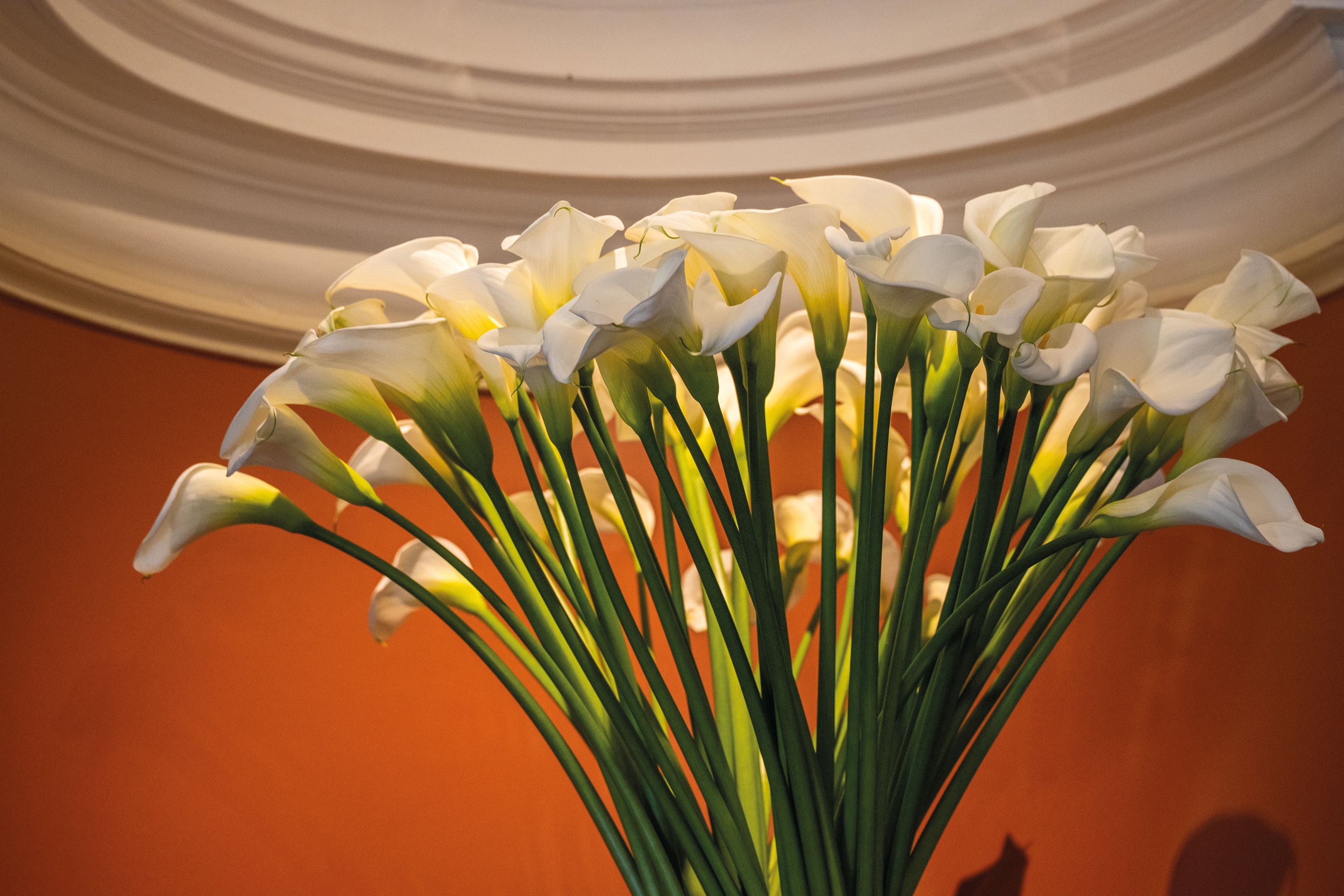
Thank you to everyone who has commented so positively on the new large flower arrangement in the Main Reception alcove. This arrangement replaces the formal displays of recent years and showcases pink blossom, yellow forsythia, and snapdragons.
The Interior Design Committee (IDC) wanted to try something different, looser, and more seasonal, particularly with sustainability in mind. It aligns better with the Club’s country house atmosphere, especially after the recent renovations of the Long Gallery and Drawing Room. The change also allows us to spread the budget across additional rooms, adding seasonal flowers throughout.
Thanks to Millie Balkissoon, Head of Front of House, who has coordinated flower arrangements for five years and enjoys the view from her desk. As the displays change with the seasons, the IDC will work with Millie to ensure creativity and quality are maintained.
The IDC has also worked with Carrie Starren, Chair of Heritage, to hang nearly 100 pictures in the newly renovated East Wing, after many were cleaned and restored. The updated East Wing Lobby, which will be the entrance to the new Brasserie, now includes archival photographs, prints, and paintings to showcase the Club’s early history.
ANNABEL RANDALL,
INTERIOR DESIGN COMMITTEE

In this issue
Club News
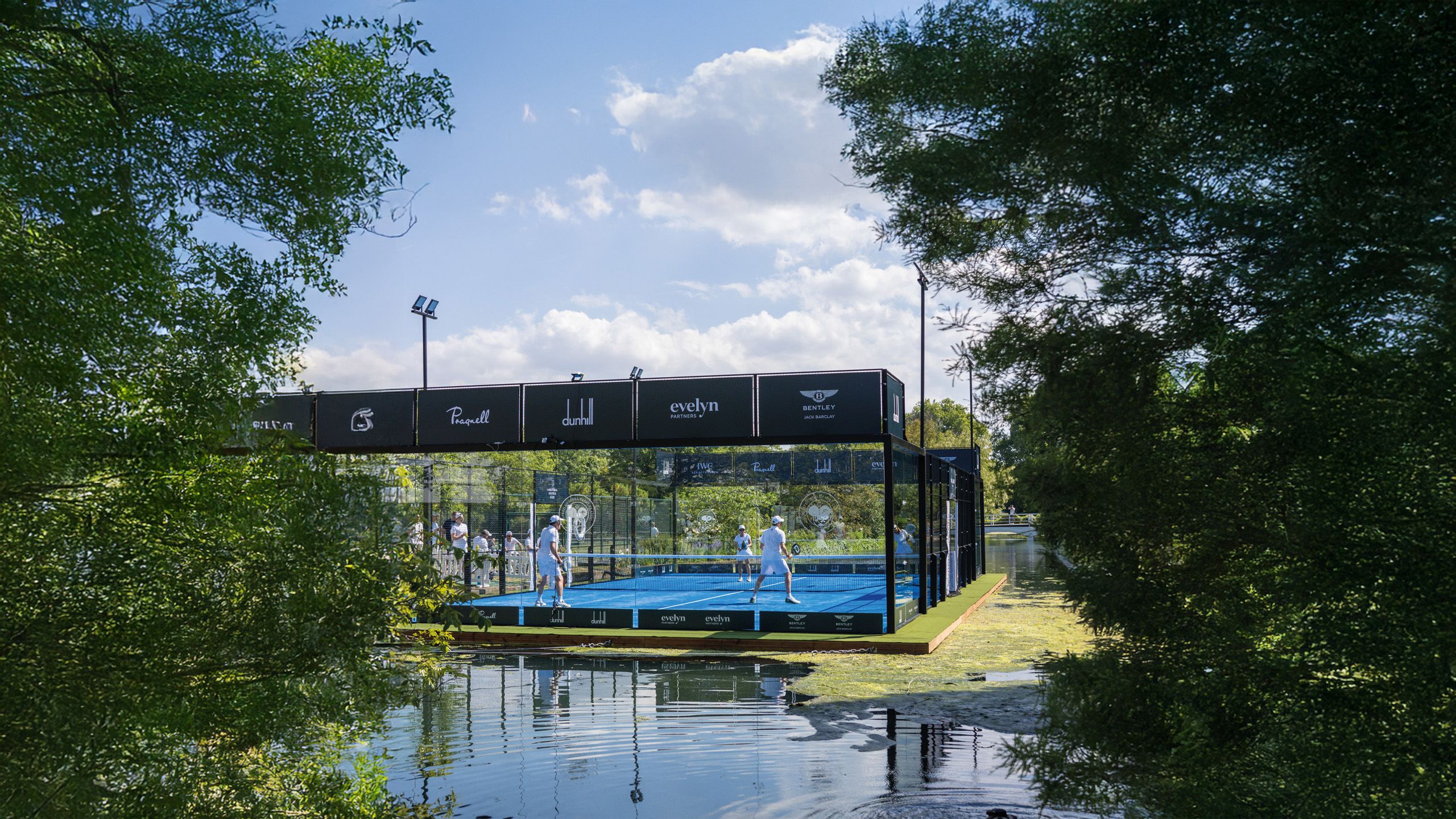
How the floating padel court was a triumph of our ‘how we can’ approach and welcome to our new Director of IT
Club Chair Simon Duffy covers the progress on the East Wing and member consultations
A sneak peak into Brasserie 1869 and finance conversations
Chairs wanted for Estates and Nominations Committees
Just some of the many tributes for our late Editor, Hana Tiller
Four years of support

Member Events
Why a varied events programme is key to engaging with our diverse membership

Estates
Bringing colour into the Club
Dovecote back on its perch
The life and love of bees
Heritage
Restoring the Club's treasures
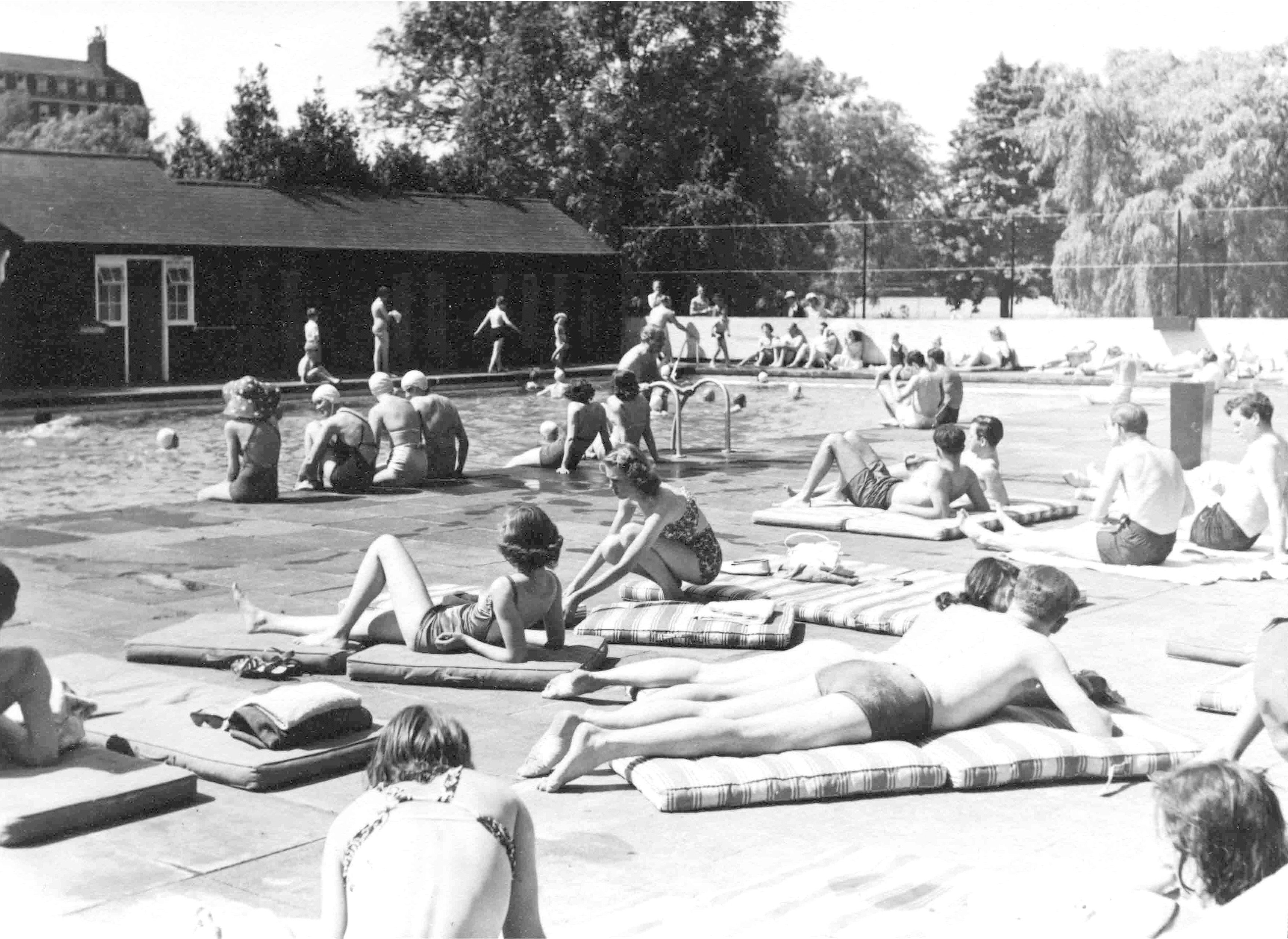
Clare Button dives into the history of the Outdoor Pool
Food & Beverage
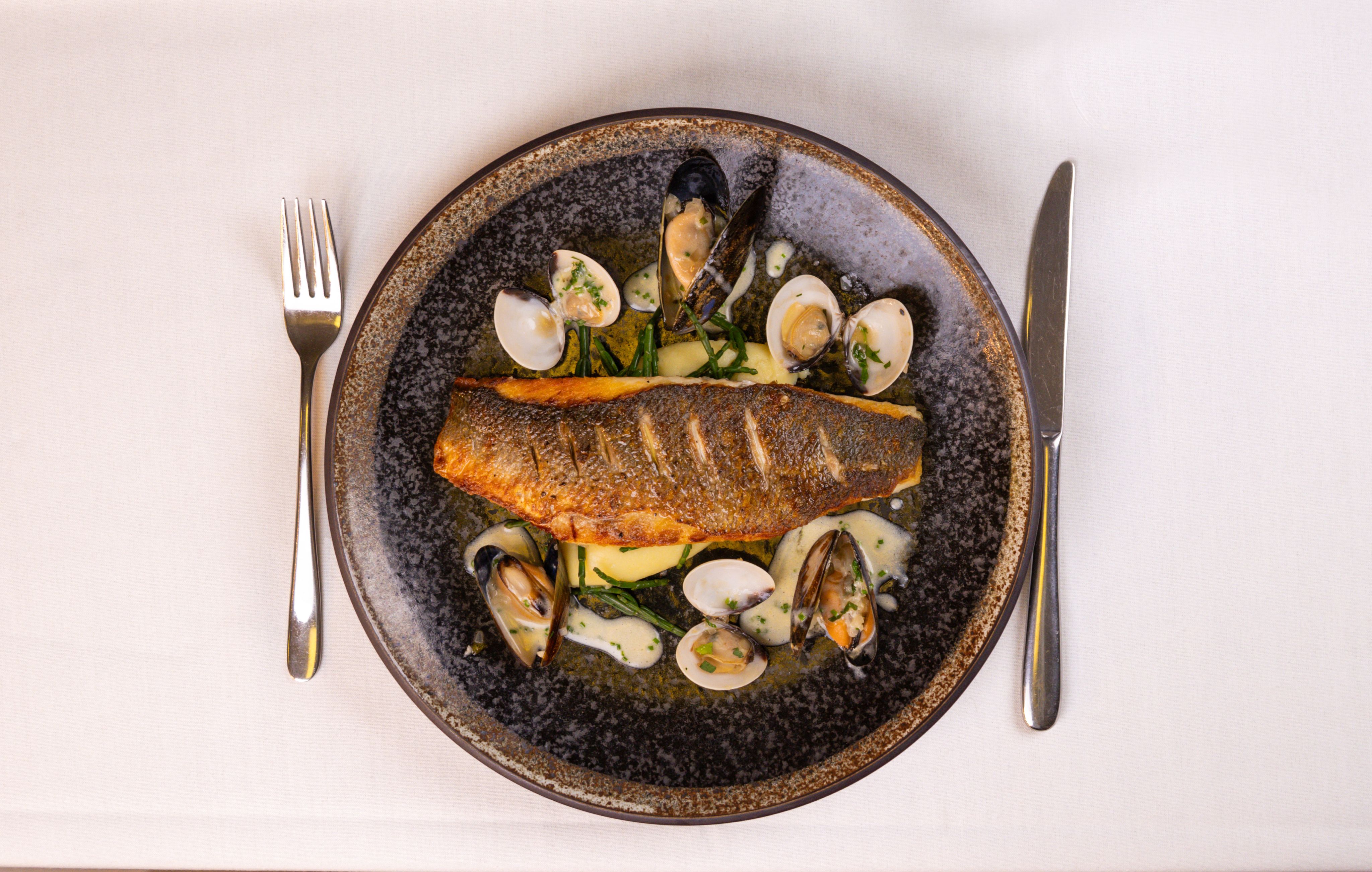
...until the July opening of Brasserie 1869
Our Club selection shifts to Southern France

Member Stories
Vodka Cocktails and Handrails
Jenny Montefiore looks back at polo ponies and royalty
We meet some of the Sports Team
Member suggestions for naming the new restaurant
Ellen Croneen reaches the halfway mark of her year of discovery.
Why Singapore and SW6 both offer a haven of tranquillity
 Built with Shorthand